College of Food Science, Southwest University
China-Hungary Belt and Road Joint Laboratory of Food Scienc


On the afternoon of November 7, Jakab István, Deputy Speaker of the Hungarian Parliament, led a delegation to visit the university. He was accompanied by Bíró Péter, Consul General of the Consulate General of Hungary in Chongqing; András Zoltán Balogh, Science and Technology Counselor of the Embassy of Hungary in Beijing; Bánky Dávid, Director of International Relations and Foreign Affairs of the Hungarian University of Agriculture and Life Sciences, and others — a party of ten in total. Duan Yuying, Second-Level Researcher of the European and Asian Division of the Department of International Cooperation of the Ministry of Science and Technology, also attended the event at the university.
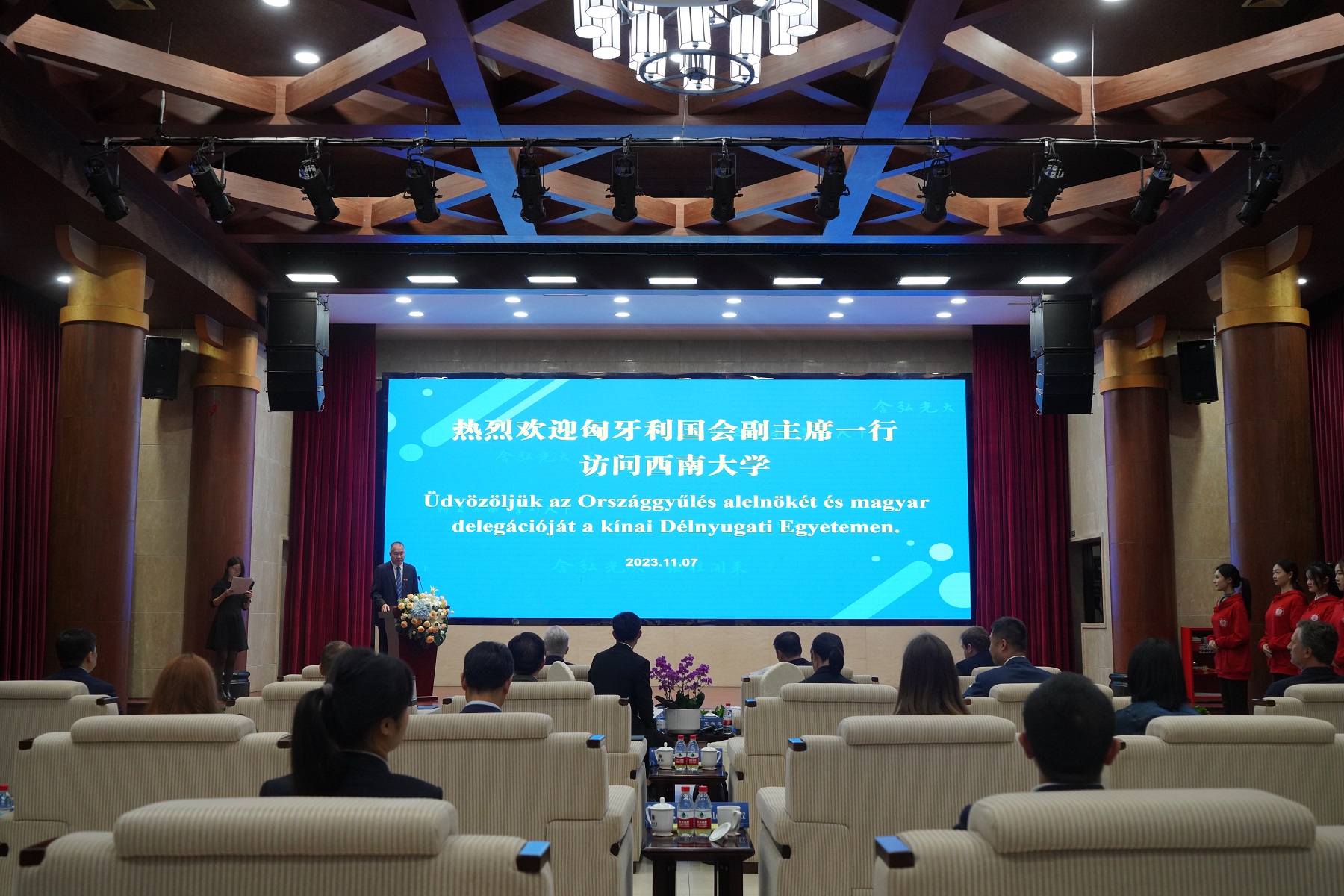
The university held a welcome ceremony and book-presentation ceremony at the Dongfanghong Conference Hall. President Zhang Weiguo attended the ceremony, which was moderated by Vice President Ge Xinyong. Heads of the Party and Administration Office, the Office of International Cooperation and Exchanges, Science and TechnologyDepartment, the Library, and the College of Food Science participated in the reception.
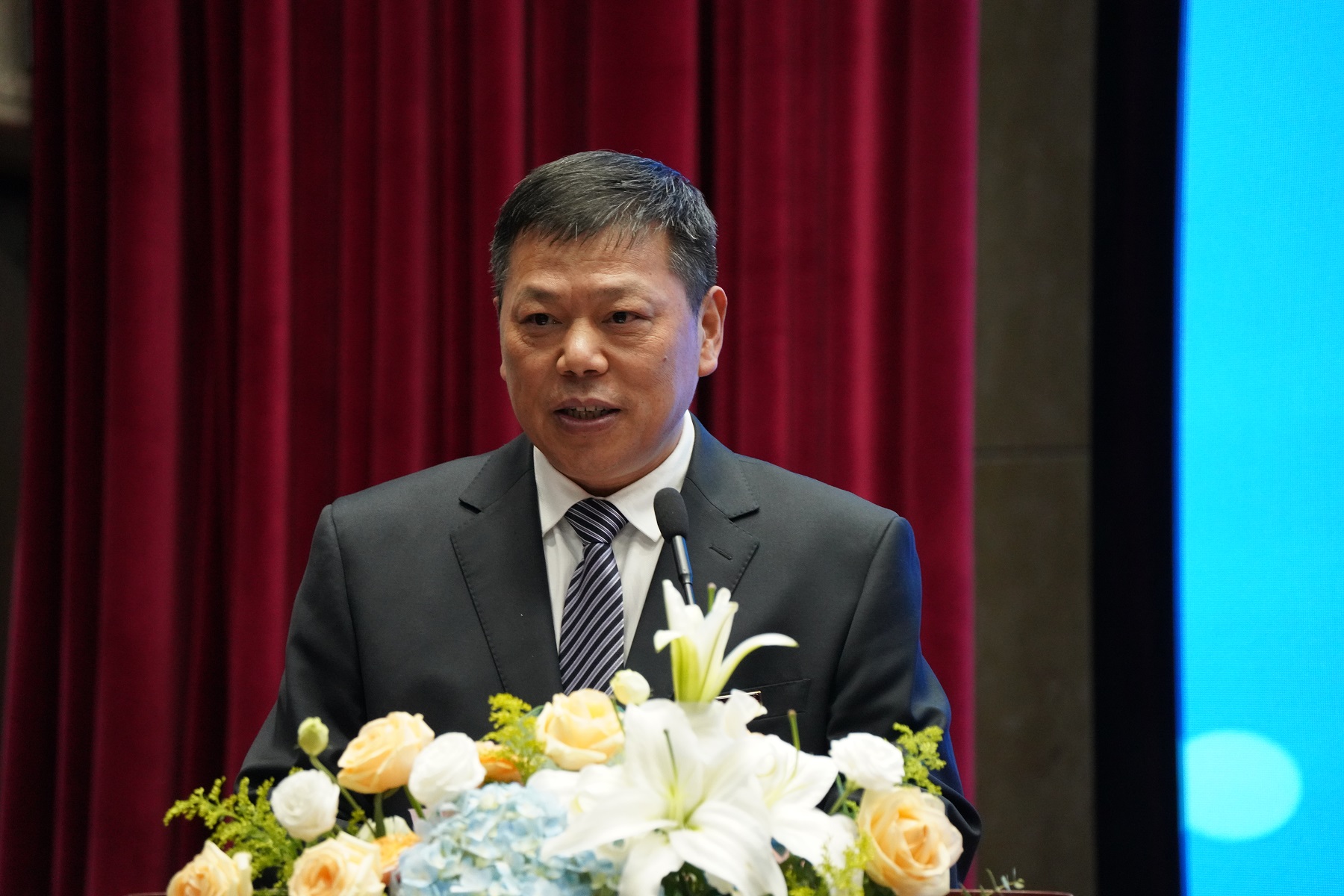
On behalf of the university, Zhang Weiguo delivered a welcome address. He noted that, coinciding with the inaugural Belt and Road Conference on Science and Technology Exchange held in Chongqing, the university had invited Csaba, President of the Hungarian University of Agriculture and Life Sciences, to Chongqing to attend the conference, and that it was an even greater honor that Deputy Speaker Jakab had made a special trip to lead a delegation to visit the university — a full reflection of the Hungarian government's attention to and concern for the cooperation between the two universities. Zhang Weiguo stated that China–Hungary relations are currently embracing new development opportunities, and that higher education, as the leader of education, bears new historical responsibilities and development missions. The university has always adhered to the principles of openness, inclusiveness, and mutual learning, fully leveraged the strengths and characteristics of the universities of both countries, and, building on the jointly establishedChinese-Hungarian Cooperative Research Center for Food Scienceand under the guidance of the Belt and Road Initiative, will push the university's cooperation with Hungary to be deeper and more concrete, and promote China–Hungary educational cooperation and exchange to progress steadily and far!
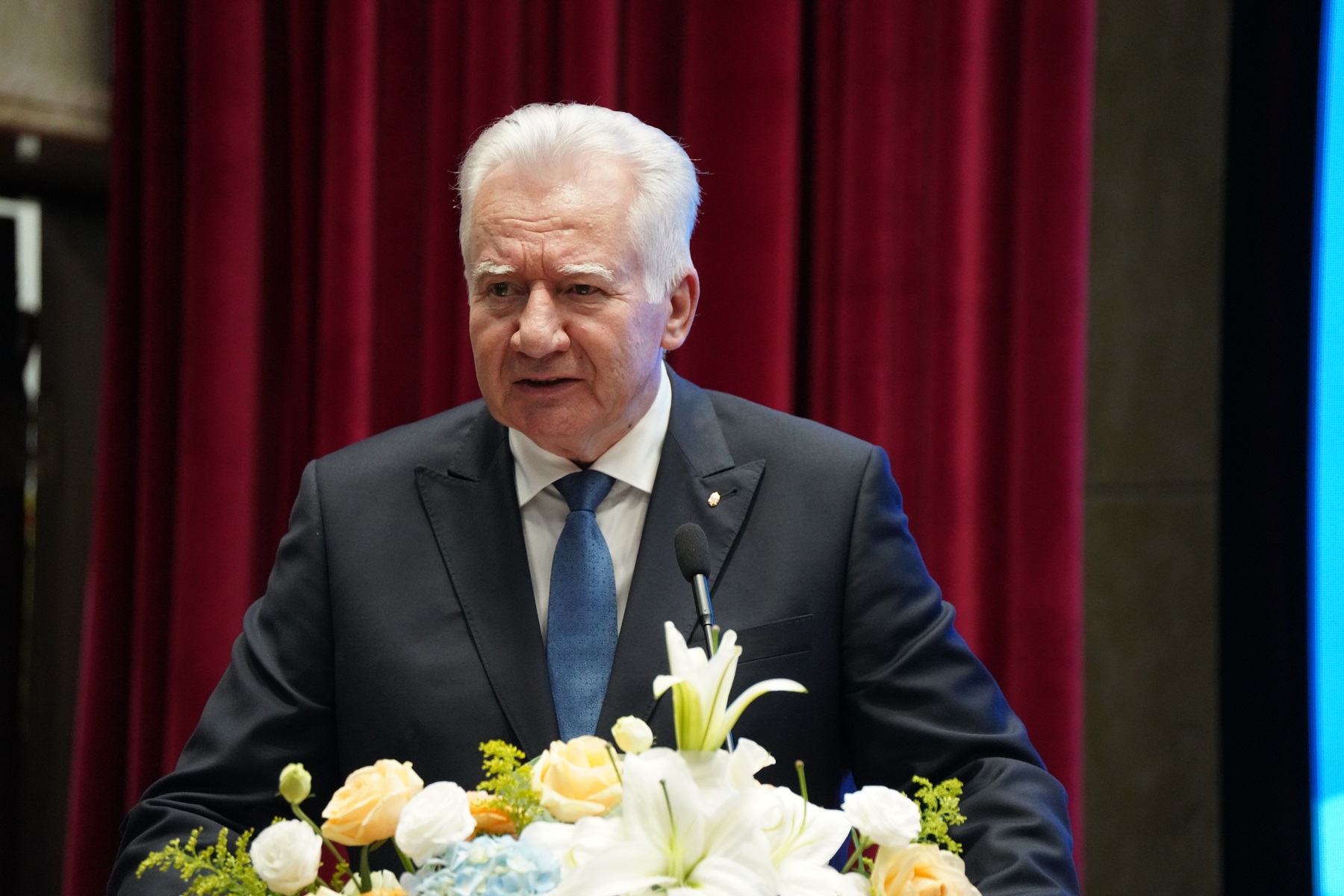
Jakab expressed his delight at seeing that Southwest University and the Hungarian University of Agriculture and Life Sciences had jointly initiated and established the "Chinese-Hungarian Cooperative Research Center for Food Science," which provides important support for scientific research cooperation between the two countries. On the path of jointly building the Belt and Road, Hungary is China's good friend. The successful cooperation of the "Chinese-Hungarian Cooperative Research Center for Food Science" has set an example for China–Hungary cooperation among other universities and research institutions. Jakab said he believes that, in the future, scientists from both countries will establish cooperation in more fields and achieve successes. Jakab presented the university's library with Hungarian literary classics, including the Chinese translation of Petőfi's poems, hoping that the gift of books would further deepen the friendship between China and Hungary.
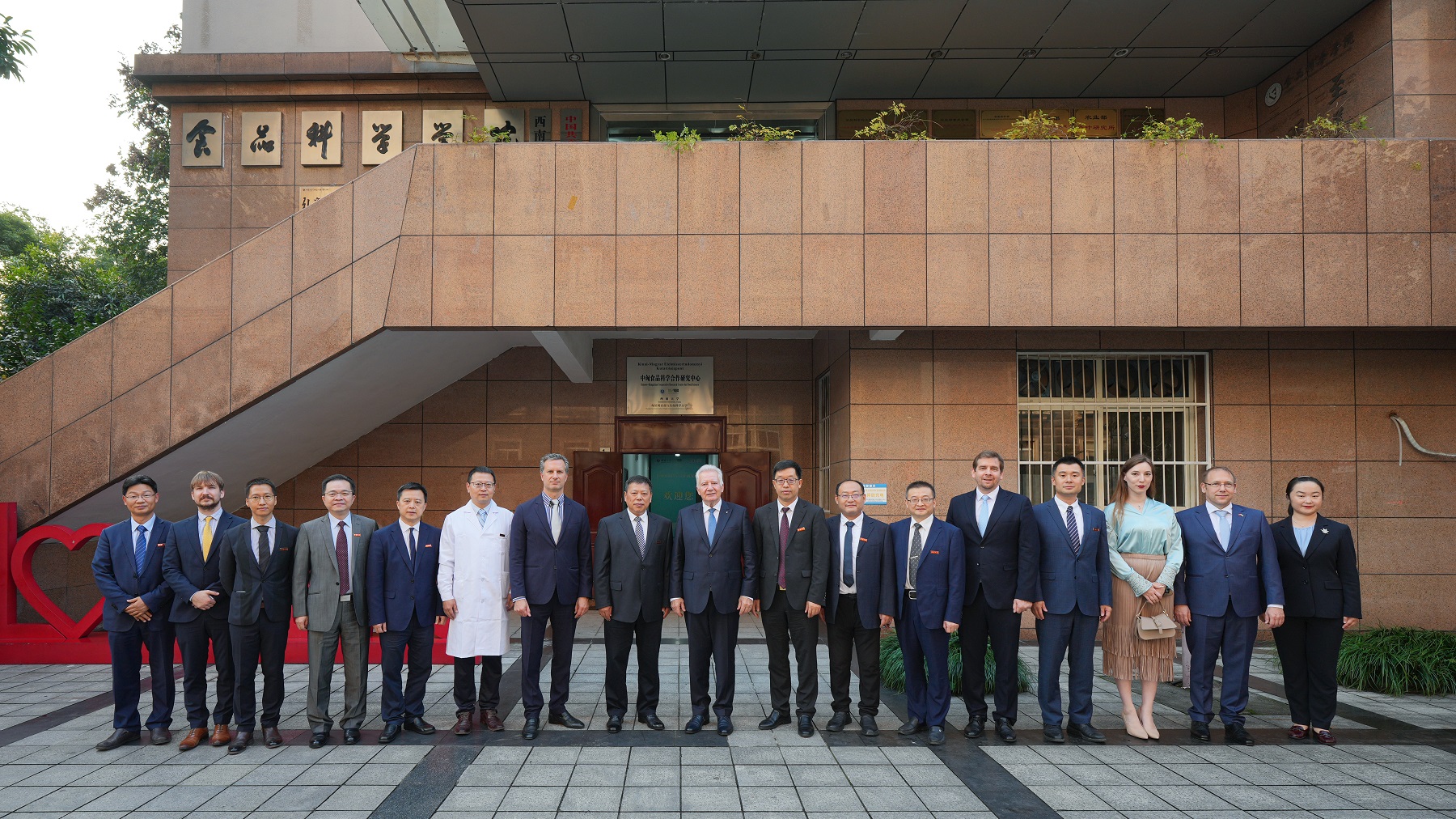
Afterward, accompanied by Zhang Weiguo and Zhao Guohua, Jakab visited the College of Food Science and the "Chinese-Hungarian Cooperative Research Center for Food Science." Zhang Yuhao, Dean of the College of Food Science, introduced the college's overall profile and showcased products developed by the college. Associate Professor Chen Kewei and Professor Suo Huayi respectively introduced the development and construction of the "Chinese-Hungarian Cooperative Research Center for Food Science" and the pilot plant workshop.
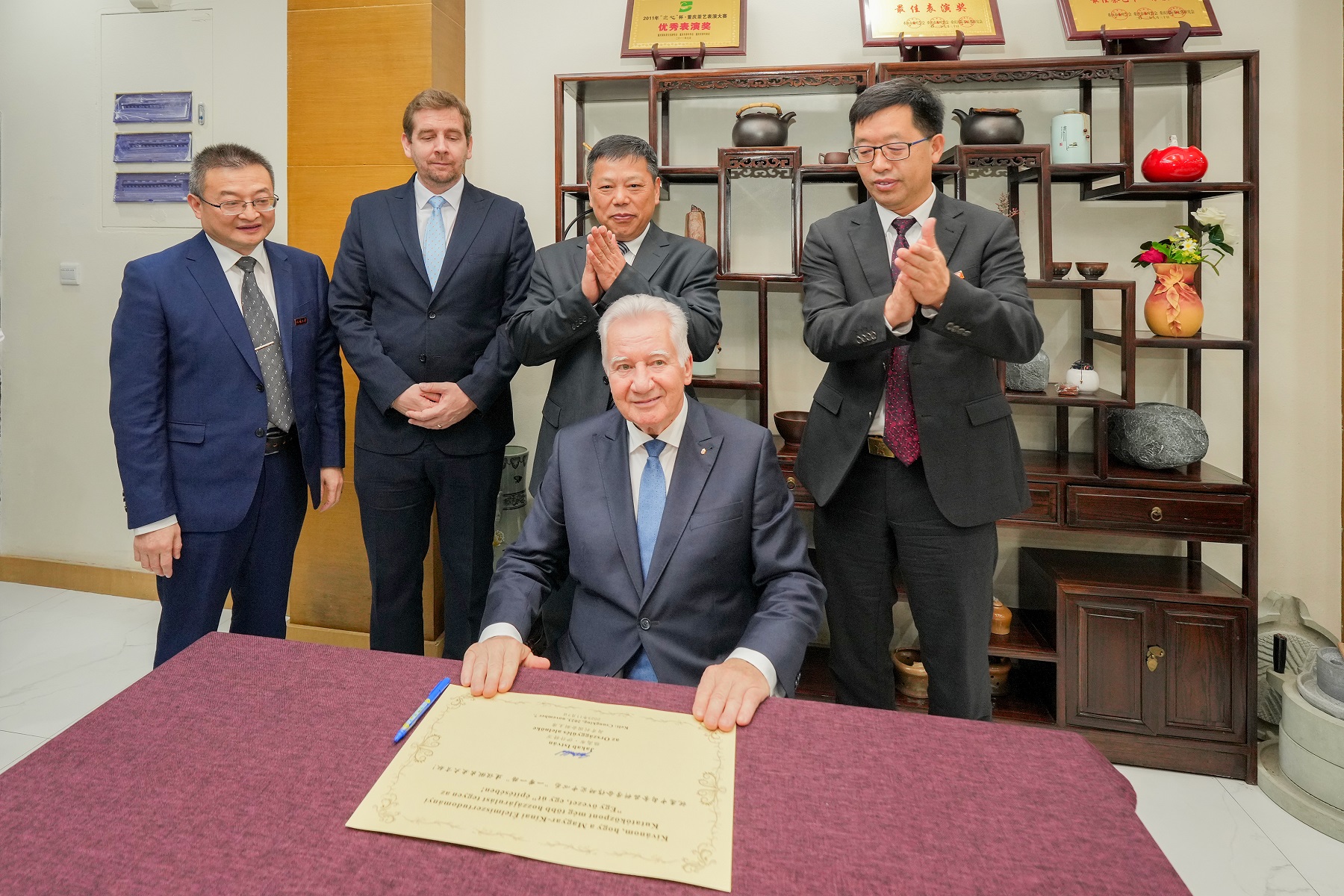
At the College of Food Science, Jakab also experienced traditional Chinese tea culture and tasted fruit wine developed by the "Chinese-Hungarian Cooperative Research Center for Food Science" using traditional Hungarian fruit wine (Pálinka) brewing techniques and locally sourced Chongqing fruits as ingredients. Jakab was delighted to taste the crystallization of China–Hungary food science cooperation — Pálinka fruit wine with a Chinese flavor. He expressed his hope that, through exchanges and cooperation between the two sides, more achievements that enhance human well-being would be produced. Finally, Jakab signed an inscription of good wishes for the center: "May the 'Chinese-Hungarian Cooperative Research Center for Food Science' make even greater contributions to the building of the Belt and Road!"
(Contributed by Fei Yuanbing; photos by Jiang Ge and Lan Tian; proofread by Han Xiao; reviewed by Li Haifeng)